


What we do
Expertise in EPA acceptable pesticide products and more.
See our many areas of expertise below.

FEATURED WORK
PUBLIC HEALTH PESTICIDES
We are experts in registering products to control public health pests and the EPA registration process. We have visited many insect repellent testing labs and were instrumental in developing the EPA regulatory requirements for skin applied insect repellents while at EPA working in conjunction with U.S. Department of Agriculture.
PESTICIDE REGISTRATION
DATA
EVALUATION
DEVELOPING LABELS
US EPA and state pesticide registrations for agricultural and public health pesticides.
Determining human health and environmental risk through toxicity, exposure and incident data.
Label development for agricultural pesticides, antimicrobials, and public health pesticides
EFFICACY
DATA
BENEFIT ASSESSMENTS
CONVENTIONAL & BIOPESTICIDES
Researching and evaluating pesticide efficacy data.
Pesticide benefit assessments and use characterization.
Entomological expertise, registration support, pesticide benefits and exposure characterization.
INSECT REPELLENTS
RODENTICIDES
INSECT GROWTH REGULATORS
We prepare U.S. EPA registration applications for insect repellents.
We prepare applications for US EPA registration for rodenticides.
We facilitate registration of Insect Growth Regulators to control public health pests.
NONTARGET ORGANISM DATA REVIEW
ECOLOGICAL
RISK
ASSESSMENTS
ENDANGERED SPECIES
We review nontarget organism safety data and develop data waivers.
We prepare ecological risk assessments.
We prepare comparative ecological risk assessments for endangered species.
REVIEWING SCIENTIFIC LITERATURE
LABEL TRANSLATIONS
REGISTRATION SUPPORT
Reviewing published and unpublished scientific literature.
We prepare label translations from English to Spanish for US EPA registration.
We provide registration support for US EPA and state pesticide registrations.
VETERINARY TREATMENTS
SKIN APPLIED INSECT REPELLENT TESTING
We work on spot treatments for animals to control pests causing disease.
We oversee skin applied insect repellent testing.
OUR CONCIERGE SKILLS
See https://www.epa.gov/pesticide-registration/pesticide-registration-manual-chapter-2-registering-pesticide-product and New Registrations: https://www.epa.gov/pesticide-registration for additional information.
01
While working with you, we request a company number and establishment number from U.S. EPA.
02
We help you develop a new pesticide registration application by evaluating your active ingredients and inerts formulation, to provide you strategic advice to satisfy EPA requirements for registration.
03
We provide details on costs, data requirements that need to be addressed, and estimated timelines. We carefully select the appropriate PRIA category for EPA review.
04
We meet with US EPA for a pre-submission (pre-registration) meeting to confirm EPA data requirements required to support registration. When doing so we prepare the PowerPoint presentation and include you and your company to participate so that you are part of the process.
05
We prepare the Confidential Statement of Formula, the Draft Label, and List of Data Requirements specific to your product to develop the data matrix. We thoroughly search databases, e.g. NPIRS, request information from FOIA, and search the literature so you can rely on non-compensable data, avoiding costly testing.
06
If studies are required by EPA that cannot be satisfied by existing data, we then provide you with guidance on the most reputable companies to conduct your studies. While studies are underway, we will continue to prepare the application for registration.
There are three different categories of pesticides that require U.S. Environmental Protectional Agency Pesticide Registrations.
Conventional Pesticides
Conventional pesticides are all active ingredients other than biological pesticides and antimicrobial pesticides. Conventional active ingredients are generally produced synthetically, i.e., are synthetic chemicals that prevent, mitigate, destroy, or repel any pest; or that act as a plant growth regulator, desiccant, defoliant or nitrogen stabilizer. https://www.epa.gov/pesticide-registration/conventional-pesticide-registration
Biochemical & Microbial Pesticides
Biochemical Pesticides Include certain types of pesticides derived from such natural materials as animals, plants, bacteria, and certain minerals. For example, canola oil and baking soda have pesticidal applications and are considered biopesticides. Biopesticides fall into three major classifications: Biochemical, Microbial, and Plant-Incorporated Protectants (PIPs).
https://www.epa.gov/pesticide-registration/biopesticide-registration
Antimicrobial Pesticides
An antimicrobial pesticide is intended to disinfect, sanitize, reduce, or mitigate growth or development of microbiological organisms or protect inanimate objects, industrial processes or systems, surfaces, water, or other chemical substances from contamination, fouling, or deterioration caused by bacteria, viruses, fungi, protozoa, algae, or slime. Wood preservatives and anti-foulants are classified as antimicrobial pesticides if the products have antimicrobial claims. Other wood preservative, anti-foulant, agricultural fungicide, and aquatic herbicide products are either classified as conventionals or biopesticides. https://www.epa.gov/pesticide-registration/antimicrobial-pesticide-registration


PUBLIC HEALTH PESTICIDES


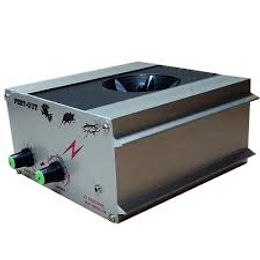
DEVICE DETERMINATIONS


ANTIMICROBIAL PESTICIDES


Public Health
Pest Control
